
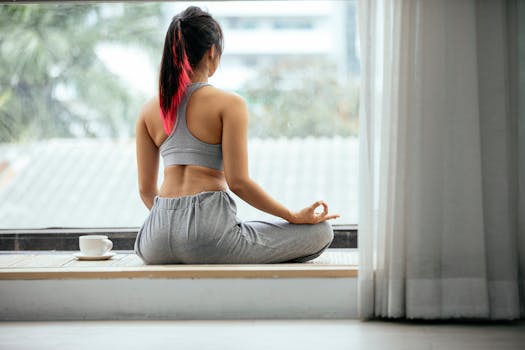

Ever felt like your brain is a browser with 47 tabs open, all playing a different, frantic song? Yeah, me too. You’re juggling work deadlines, family needs, that rogue sock that still hasn’t found its mate, and somewhere in there, you’re supposed to be a functioning human. It’s enough to make a saint spontaneously combust. Enter meditation – the ancient practice promising peace. But for many of us, the idea of sitting cross-legged for an hour chanting “Ohm” feels less like stress relief and more like adding another item to our overwhelming to-do list. Fear not, fellow frazzled warriors! We’re about to demystify how to meditate effectively for stress relief, minus the pretentiousness and with a healthy dose of reality.
Is Meditation Just Fancy Napping? (Spoiler: No, But Almost as Good)
Let’s be honest, the initial vision of meditation often involves serene monks levitating slightly above a yoga mat. While that’s a lovely mental image, it’s not the practical reality for most of us. The core idea isn’t about emptying your mind (good luck with that!) but rather about observing your thoughts without judgment. Think of your mind as a busy highway. Your thoughts are the cars. Meditation is learning to sit by the roadside, watching them go by, rather than jumping into every single one and driving it off a cliff.
The “stress relief” part isn’t some mystical byproduct. When you learn to detach from the incessant chatter, you reduce the power those anxious thoughts have over you. You build resilience, making it harder for life’s inevitable bumps to send you spiraling. It’s like developing a mental immune system.
Your First Step: Finding Your Zen Nook (No Incense Required… Unless You Want To)
Forget the Pinterest-perfect meditation rooms. Your stress-relief sanctuary can be anywhere.
The Kitchen Chair: Seriously. After the kids are in bed, or before the morning chaos erupts, that sturdy kitchen chair can be your throne of tranquility.
A Quiet Corner: Even five minutes in a room with a closed door can work wonders. Turn off notifications. Tell yourself you’re “busy” with important self-care.
Your Car (Parked!): Before heading into work or after a long day, a few minutes of quiet in your car can be a surprising oasis. Just make sure the engine is off and you’re not blocking traffic.
The key here is accessibility. If your meditation space requires a pilgrimage or a feng shui consultation, it’s already adding to your stress.
The “How To Meditate Effectively for Stress Relief” Toolkit: Your Practical Guide
So, you’ve found your spot. Now what? Here’s where we get down to the nitty-gritty of how to meditate effectively for stress relief.
#### 1. Set Realistic Expectations (and a Timer)
Start Small: Don’t aim for an hour on day one. Even 2-5 minutes is a fantastic start. Consistency trumps duration. A daily 5-minute meditation is infinitely more effective than a weekly 60-minute marathon that leaves you feeling guilty the rest of the week.
Embrace the Wandering Mind: Your mind will wander. It’s its job! The moment you notice you’ve drifted off into thinking about your grocery list or that awkward conversation from Tuesday, that’s a win. You’ve just meditated! Gently guide your attention back to your chosen anchor. This is the practice.
#### 2. Choose Your Anchor: The Lighthouse in Your Mental Fog
Your anchor is what you return your attention to when your mind goes rogue. It’s the steady point in the storm.
Your Breath: This is the classic for a reason. Feel the sensation of air entering and leaving your nostrils, or the rise and fall of your chest. Don’t try to control it; just observe.
Bodily Sensations: Bring your awareness to the feeling of your feet on the floor, the pressure of your body against the chair, or any tingling in your fingers.
A Sound: Focus on a gentle, consistent sound, like a fan or ambient music (if it doesn’t distract you).
#### 3. The “What If My Body Hates Sitting Still?” Conundrum
Physical discomfort can be a huge barrier. Here’s how to navigate it:
Comfort is Key: If sitting on the floor is agony, use pillows, cushions, or even a comfortable chair. Your spine should be relatively straight but not rigid. Think “tall and relaxed.”
Gentle Movement: Some people find guided meditations that incorporate gentle movement (like mindful walking) more accessible. You can even do mini-meditations at your desk – just focus on your posture and breath for a minute.
Body Scan: This is a brilliant technique for dealing with physical tension. You systematically bring your attention to different parts of your body, noticing any sensations without trying to change them. It’s a fantastic way to build awareness of where you hold stress.
#### 4. The Power of Guided Meditations
For beginners, guided meditations are like having a friendly Sherpa leading you up Mount Mindfulness. Apps like Calm, Headspace, or Insight Timer offer a vast library of meditations for stress relief, sleep, focus, and more. They provide gentle prompts and often have soothing background music. This is an excellent way to learn the ropes and explore different styles.
Debunking the “Musts” of Meditation
Let’s ditch some common myths that might be holding you back from how to meditate effectively for stress relief:
Myth 1: You MUST sit in the lotus position. Nope. Any comfortable posture works.
Myth 2: You MUST have a completely silent mind. If you achieve this, please write a book. For the rest of us, observing thoughts is the goal.
Myth 3: Meditation is only for “spiritual” people. It’s for anyone who wants a bit more peace in their life, regardless of their beliefs.
Myth 4: You’ll feel immediate bliss. Sometimes, yes. Other times, you’ll just feel… like you sat still for a bit. And that’s perfectly okay. Progress isn’t always dramatic.
When Meditation Feels Like a Chore (Yes, It Happens)
There will be days when sitting down feels like the hardest thing you’ve done all week. On those days, remember this:
Be Kind to Yourself: This isn’t a test you can fail. If you only manage 30 seconds before jumping up, that’s still 30 seconds of conscious effort.
Try a “Micro-Meditation”: Take 10 deep breaths while waiting for your coffee to brew. Focus on the sensation of the water heating up.
Reframe It: Instead of “I have to meditate,” try “I get to take a moment for myself.” Shifting your perspective can make a huge difference.
Conclusion: Your Daily Dose of Sanity
Learning how to meditate effectively for stress relief isn’t about achieving enlightenment overnight. It’s about building a consistent practice, however imperfect, that offers you a sanctuary from the daily grind. It’s about carving out moments to breathe, to observe, and to remember that you are more than your to-do list. So, find your quiet corner, set a gentle timer, and give yourself the gift of a few moments of calm. Your future, less-stressed self will thank you.